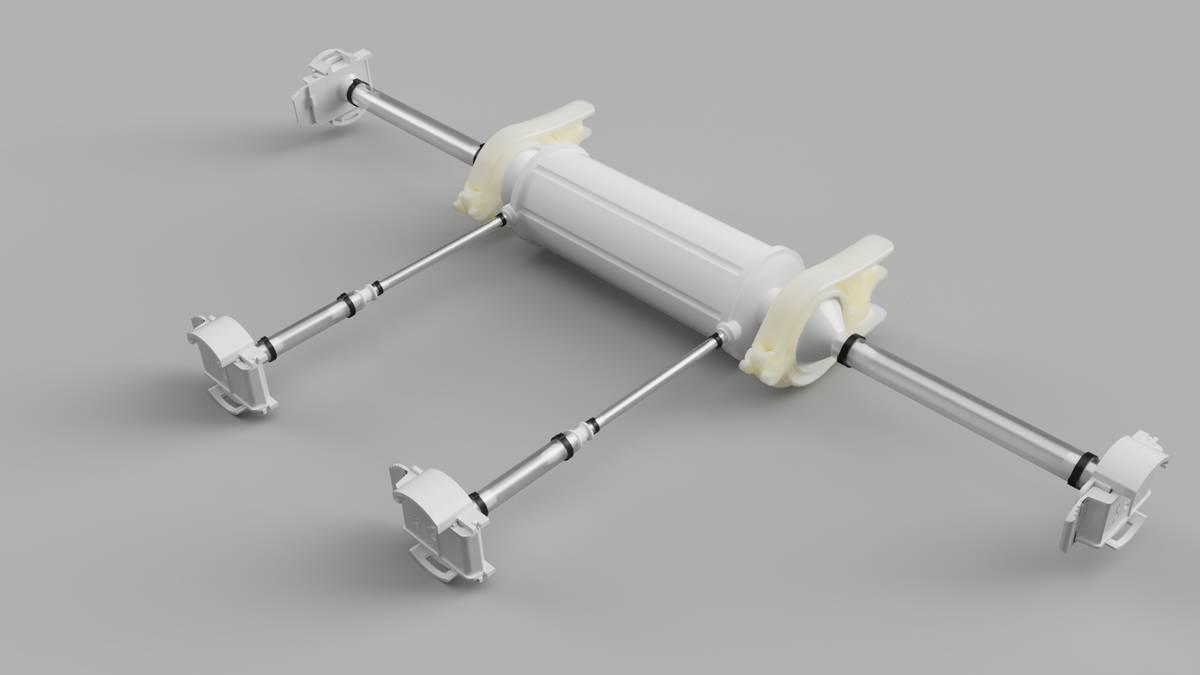
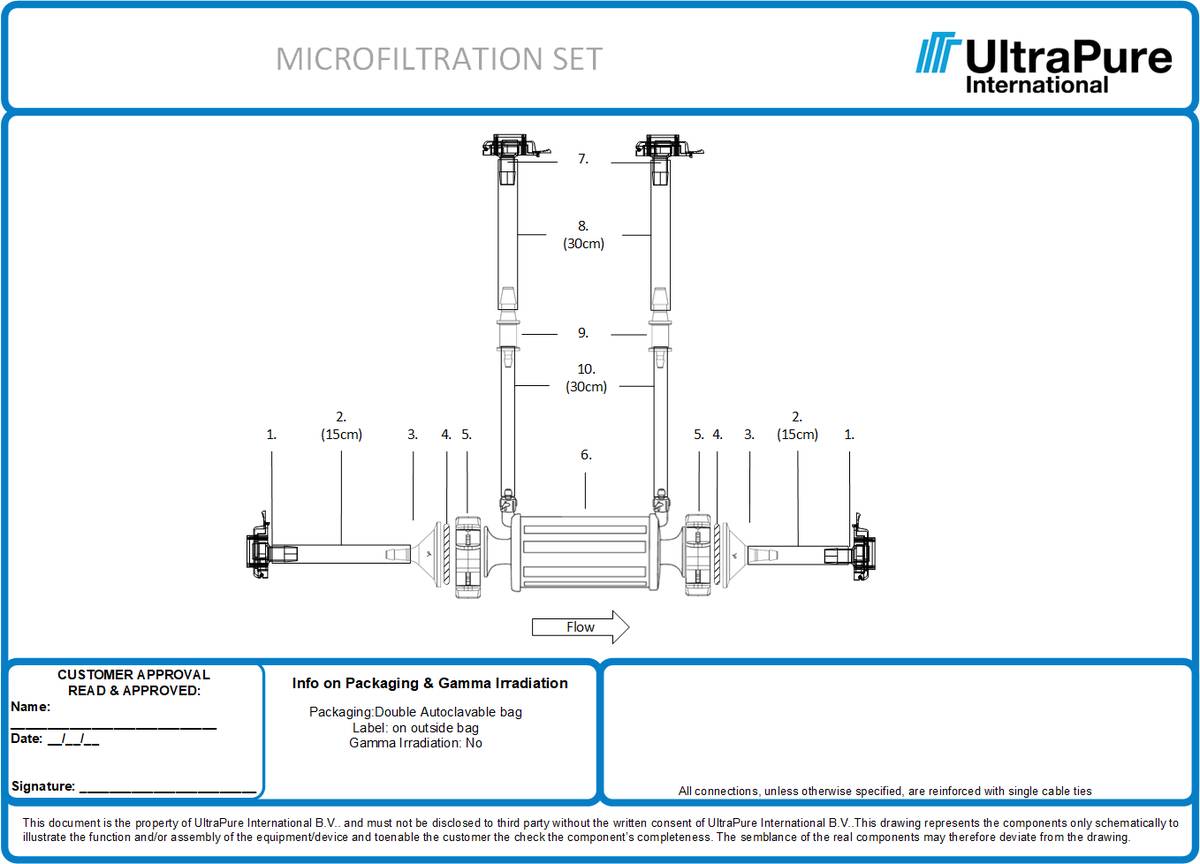
Microfiltration set
-
3D render
-
Technical drawing
-
Technical information
Microfiltration is a membrane-based separation process used to remove both viable and non-viable particles.
It works by passing fluid through a porous membrane with pore sizes typically ranging from 0.1 to 10 micrometers. Unlike ultrafiltration or nanofiltration, microfiltration does not retain dissolved substances such as proteins or salts. Instead, it targets larger particles like bacteria, yeast, and cell debris.
Microfiltration is commonly used in multiple downstream applications. It plays a key role in harvesting (especially when the product is secreted into the medium), clarification (removal of particulate matter), and sterile filtration (ensuring the microbial safety of the final drug product).
One exception to its downstream use is in buffer and media filtration, where microfiltration is often used upstream to ensure fluids are free from contamination.The filter itself is single-use and typically sized to handle the entire batch volume without the need for replacement. In larger processes—or as a precaution—a secondary (parallel) filtration setup may be installed to allow for seamless switching in case of clogging.